I would ask people for the time
AOG, Madrid
A few months ago, maybe as far back as last September, my watch's battery ran out.
I did nothing for a couple of days thinking, or rather, hoping in the most procrastinating manner, that I would get around to changing the battery in a couple of days.

A couple of days turned into a couple of months, and a couple of months turned into roughly 9 months.
I have now been without a wristwatch for almost a year and, yes, there have been many times when I have missed it.
Last November I took it to a local watch shop only to be told that, because of the type of watch it was, they could not do it.
A couple of months ago, a lady from work told me that a relative of her husband's could change the battery.
A couple of days later she said she was really sorry, but, "Being an Omega, he doesn't have the proper equipment to open it up".
When I lived in London, changing the watch's battery had never been a problem. I had a local jeweler who changed it in a couple of days, and it was not very expensive.
Getting Around
Of course, these people also exist in Madrid, but they are not within walking distance, and my life these days is all about walking distance.
Having been spoiled as a child and a teenager growing up in America, where I drove everywhere and had a passion for cars, these days I live without the benefit of personal transport and rely on public transportation to get anywhere. Buses and subways are my method of braving long distances.
When I lived in London and I had a car -my much beloved 1988 Volvo station wagon being the last of the crop, I would move about the city using public transport too.
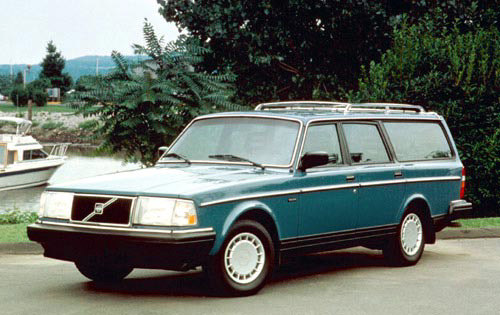
However, come the weekend, out came the car.
Drive here, there.
To the West End or South London, to Windsor's Great Park or the art galleries in Hampstead or Whitechapel.
But in Madrid, I don't own a car.
I really don't need it, so public transport has become, after walking on foot, my preferred mode of moving about town.
Also, there's the element of fatigue. You, the reader, may be able to relate to this. Why is it that as children we had humongous reserves of energy but, as adults, we can hardly make it through the day?
It is a recurring theme that, when I get out of work, I make it home, and do my best not to fall asleep on the sofa. I have zero energy.
So, when faced with the task of taking my watch and finding a jeweler who can change the battery, I just can't spare the few 'joules' I may have in my body doing anything other than dinner, and, maybe, doing some reading.
I also want to add changing the channel to that list.
Alternative Trinkets
So I live with no watch.
Oh, but you own only one watch? No, I own five watches. All five have no battery, but it is the Omega -the one my mother bought as a birthday gift years ago- that I use on a daily basis.
My wrist is now so used to not having a watch, that the pale, white, mark I had on it, has disappeared and now my entire arm is one color.
So, what have I done in the mean time?
Well, when I was younger and this happened, I would ask people for the time.
But now that I'm an adult, I ask no one for the time.
Instead, I use my old mobile/ cell phone when I need to know what time it is.
I don't have an iPhone or a smart Android phone (other than work's BlackBerry) but I think that my regular, old-fashioned, mobile Samsung mobile phone (which slides open and I love that), is apparently more important a machine than my watch.
Eventually, I'm not sure when, I'll replace the battery and that will have been that.
But after I do I'll continue to carry a mobile/cell phone on me.
I'm not sure about when it is that I'll stop, if ever, carrying a phone on me. It has become one of those indispensable machines without which we could not really function very well.
No, I don't think that my life would end if I didn't have a phone -and I have thought about not having a land line at all- but, curiously enough, I am aware of how big a part of our daily lives it has become.
Just like the iPad.
I wake up and, before I go to work, I turn the radio on and start to quickly peruse the morning news.
I think our lives these days are 'connected' to something, for better or for worse.
And where will it all lead?
Two days ago I was having dinner with some friends (walking distance from home).
One of them, an American cartoonist living in Spain, mentioned very casually that people will "eventually grow tired of the internet and will move on to the next thing".
Yes, it was one of those "excuse me... what?" moments.
Will the internet change... or disappear?
Well, yes, it changes all the time.
The internet in 2013 and in 1993 are two very different beings.
And, like television, it seems to be here to stay.
Will people grow tired of it? If so, what will come next?
Yes, I'm sure that someone, somewhere, will be thinking of it, but I'm not sure about how successful they will be with their idea in my lifetime.
After all, Da Vinci thought about submarines in the XVI century (1515 I think), but we didn't really see those until 400 years later...


 Posts
Posts


