I
have always been interested in writing. Putting words and thoughts on
paper fascinates and entertains me. It is difficult to explain why, but
it does. And it probably does not need really require an explanation.
I suppose that if I ever lost my sight, I would continue writing somehow, though I’m not sure how, or even why.
But then I don’t know why I write now. I just do.
I think that is true of most writers, they just write. They just do. Even bad ones.
And
yes, not everyone is a writer (though I will concede that everyone has a
story to tell). There are writers who are writers and are not sure that
they are. But they are.
PAIN
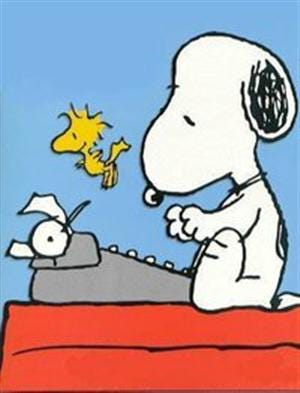
Hemingway himself once wrote: “There is nothing to writing. All you do is sit down at a typewriter and bleed.”
Was
he on to something? I have always wondered about that, but by and
large, I agree with him. A lot of pain goes into writing, and I don’t
know that everyone (including myself) can do it. Bleeding, though easy
enough, is certainly not painless. And it usually leaves a mark on your
body. I suppose writing does too.
And so I have read many writers who spoke about their craft. Our craft. This thing we do.
Some mention how easy it is, how relaxed. How it is a form of therapy for them.

Some 'frutti di bosco'.
I respect that. I understand that writing can be cathartic.
It brings things out.
But writing is also painful. Mostly painful.
Not just plain painful. We are talking pain of the fancy type. Caramelized frutti di bosco, pain with shredded white chocolate on top. And then some.
You
are giving birth to people, and ideas, and situations that did not
exist before. Much like children, there is a painful birthing process,
let no one tell you otherwise.
“If there’s a book that you want to read, but it hasn’t been written yet, then you must write it.” Toni Morrison.
So simple, right?
So straightforward.
Yet,
those simple words will haunt you as a writer no end. Creation can be
such an excruciating and long-winded process. And the worst part? You
never know when you are done. Not really.
Jackson Pollock was once asked about his work. “How do you know when you are finished with a painting?”
His reply?
“How you do you know when you are finished fucking?”
When
you read a book, you never learn about the pain behind it. You may read
author interviews where they tell you where they got the idea, or how
they went about putting it to paper. Yet you never hear about the pain
and heartache behind each chapter.
Behind every first line. Behind dialogue. Or the ending. Or the various bits in between.
You
don’t hear about editing, or self-censorship. About how you often think
you are an idiot for even attempting to do this. About how you can feel
insecure, lost, mistaken, amiss.
No, as readers, all we care is about the end product. The finished work.
“It’s none of their business that you have to learn to write. Let them think you were born that way”. Hemingway.
I
recall the books I’ve read. The authors I just simply couldn’t put
down. And I have tried to analyze what it was about them that kept me
reading. Tried to capture some of their brilliance in my own work.
It
is obvious that behind every thought, character and setting, there is a
degree of suffering on the part of the writing. Perhaps that is why we
react to books and literature as we do. Because we can recognize the
pain for we too have felt it.
That is how (probably) great authors are born. Through pain and suffering.
But, as with everything else in life, there’s different kinds of pain, and as readers we react to that which speaks to us.
Two
different people can be reading the same book by the same author and
react differently. One may love it, and the other hate it. One may think
it is brilliant, and the other might think it is just not worth turning
another page.
TOIL
A couple of weeks ago I was at my regular Tuesday meeting for writers in Madrid (The Madrid Writers Group).
We
were all sitting close to each other, writing away on that evening’s
exercise; I looked up at two of the people nearest to me. I was amazed
at how they wrote.
Both of them were writing on lined
(ruled) paper.
One of them was just ignoring the lines and writing in a
manner perpendicular to them. The other, more creatively, wrote
diagonally across both pages.
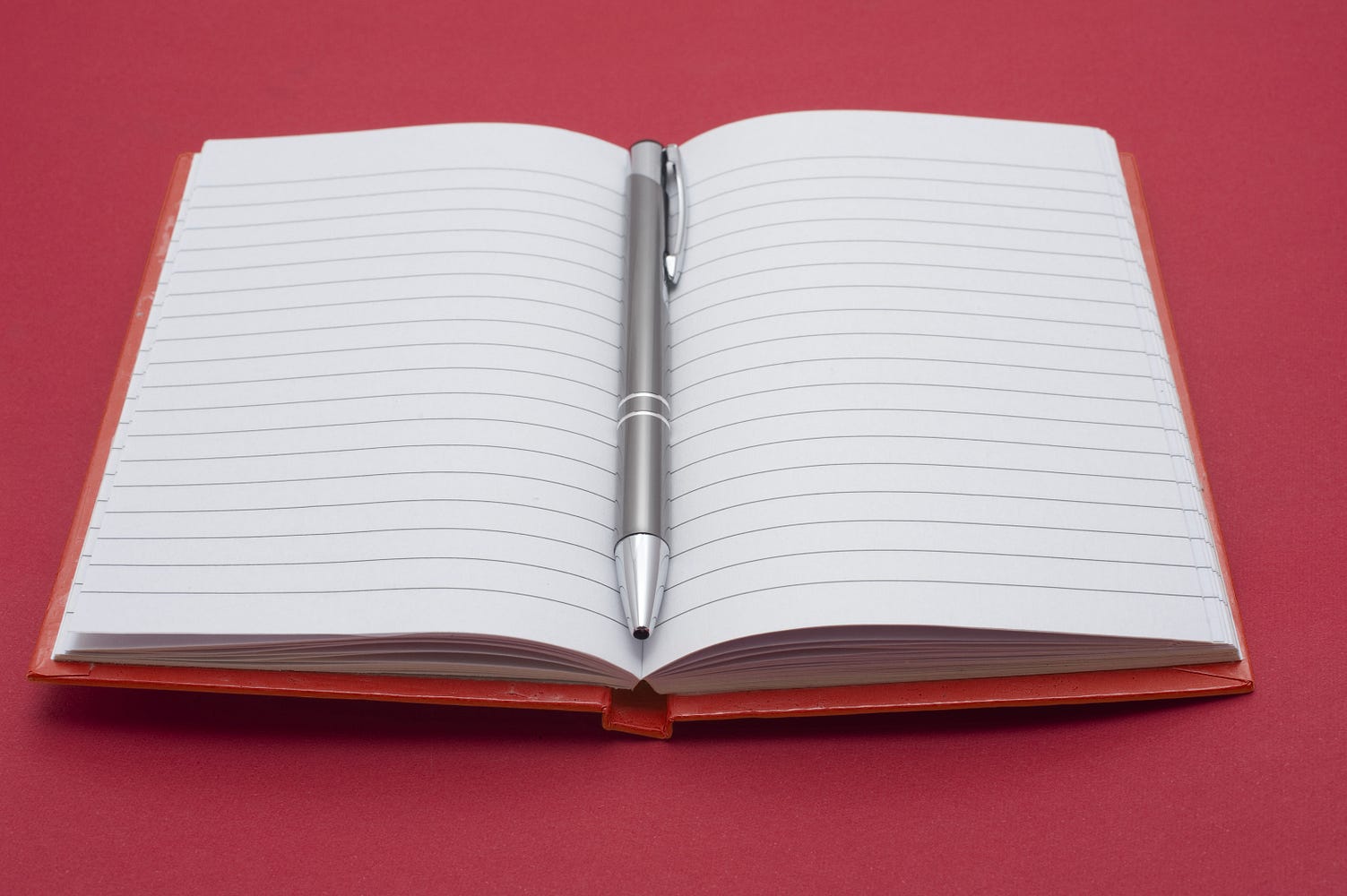
Ruled paper.
I was surprised!
Initially I thought it showed a great disrespect for the paper itself, this just ignoring its pre-set ‘paths’.
Then,
I figured, it just meant that this was the way the felt most
comfortable writing. Just as I am most comfortable writing within (more
or less) the lines and margins.
But ultimately, it was enlightening to see how they took a medium and redefined it.
Artists often do that.
I would argue it is one of the things that makes an artist: redefinition.
As
I walked home that night, I was glad to have been surprised that
evening. Their writing patterns had certainly been very enlightening.
Challenging even. It is what initially inspired this post.
‘Just So’
Having
seen how other people wrote, how they molded the medium to themselves,
and not the other way around, I started to think about how unimportant
-it would appear- the medium is.
Although it isn’t.
Not really.
Writing depends on so many other things too.
To write, as I believe, any writer will tell you, you need to be comfortable in every single way.
Everything must be ‘just so’.
The
right kind of pen and paper, or keyboard, or type writer. The right
type of lighting, of environment, of ambient sound. Yes, even that.
The
right kind of ambient noise is also extremely important for creativity,
which is why so many writers are to be found in coffee shops all over
the place.
And, according to many, there’s a reason for that:
“A
moderate level of noise enhances creativity compared to both low and
high levels of noise. Moderate background noise induces distraction
which encourages individuals to think at a higher, abstract level, and
consequently exhibit higher creativity”, (from the Rainy Café website).
But just in case you can’t go to one, you can always stream reality into your own setting.
So, there you are. With the right kind of everything in place. You, your stuff, and your ideas, all set to go.
So, in this day and age, what’s the first thing you do once you are all set to go?
That’s right, you take your phone out and check your messages.
God
knows you cannot write another word, your characters cannot utter
another sentence, and your plotline cannot advance, until you have
checked every single bit of social media going on in your life!
From
facebook to instagram, and everything else in between, your social
presence must be checked, re-checked, and updated before your
intellectual endeavors can take place.
Those cat pictures need your ‘likes’.
What your friends had for dinner last night need a little ‘heart’ and a comment: “Wish I’d been there!”
Anything to avoid the pain that you know is coming, right?
So you do all that, and, somehow, manage to get it out of the way and concentrate on the task at hand.
My Christmas vacation started off with
me flying to London a few days before and ended with me flying back to
Madrid from Barcelona airport a couple of days ago.
In
between both airports, as is customary since I relocated to Spain and
met my other half, we spend part of the holiday season in the UK, both
in London and in rural Oxfordshire, and part of it in northern Spain, mostly Bilbao and coastal Cantabria.
Then, once the family duties are done, we relocate to the Catalan coastal town of Sitges
for a couple of days of rest before facing the year ahead. Yes, we both
end up shattered and fatigued after all the travelling, the gifting,
the emotional encounters with family, friends, each other, &c.
I
left sunny Barcelona and landed in a cold and rainy Madrid thinking
about the year ahead. About my career, my life, my plans. The challenges
ahead, the things I’ve left behind.
I realised that, basically, since my 20s, I’ve been consciously trying to do the same thing, year after year: achieve something.
Achievement
is, naturally, defined and applied to whatever new task happens to pop
up in my life, and it is not always reached… though I have been known to
surprise myself.
I was talking to a friend of mine just after I got back to Madrid and the subject came up: NewYearResolutions.
Only last year, and for the first time ever, I actually took out a piece of paper and wrote down a few lines.
I
forgot, or redefined, or lost, most of them as the year landed squarely
on my lap and brushed aside most of my good intentions.
But two in particular kept popping into my head throught the entire 12 months the year lasted.
First, writing.
My actual resolution was to write 12 short stories in one year. One per month. That did not happen.
I ended up writing about 3. But then I also co-wrote a script for a short film, and, back in November, I participated in NANOWRIMO.
No, I did not finish a 50K word novel in 30 days.
But something else happened. I took up an old, forgotten, sci fi novel I had started to write in my very early 20s.
Along the way, it has grown, changed, and been re-started a couple more times.
But, for the time being, it is incarnating
itself semi successfully. I’m not sure about when I’ll finish it, but I
want to continue writing it. This is an achievement in itself.
Unfortunately, those things which always get in the way of writing (you know, life, work, shit) are still there.
I
had this idea that I could do some writing during the Christmas season.
I even took my laptop all over the place in the off chance I would get
some time to do a bit of writing. No such luck.
However,
that thing I do when I write, think about the story, did went on. I
kept thinking, and have kept thinking, about the story, the characters,
the twist, throughout.
Then my partner told his 12
year old niece that I was writing a novel, and two days later she was
asking me about it. She is the only person who actually knows what it is
about, other than me. And the best compliment was when she told me she
wanted to read it.
Of course, at the tender age of 12,
she got a ‘doctored’ version of it. And She may have to reach 17 before
she can actually read it. But I’m glad she was interested.
www.fofothing.com/polo
The other thing I wrote down has a lot to do with me personally.
I wrote down “Be more sociable”.
Not that I am not sociable. I love society. I love socialising. Meeting friends. Doing things. Going places.
But
unfortunately, I am not always in the mood to do any of that. Usually
because I am tired. Or not interested on what is being offered. Or
unwell. Or whatever other cheap excuse I can think of to redeploy inside
and stay home and not see anybody during daylight hours…
However,
more and more, this past year I tried continuosly to put my initial
distate for the things I dislike aside, and endeavored to concentrate
instead on enjoying my friend’s company whenever it is offered -which is
often.
Unfortunately for me, I’m still too stupidly
shy, or coy, or reticent, or whatever the hell is wrong with me, to
actually call friends up and seek them out.
Yes, that
thing that normal people do on a regular basis I tend to find difficult.
Not always. Not all the time. But now and again. Here and there.
But, throughout 2013,
whenever somebody called me, whenever I saw their name on the phone’s
screen, I did my best to just pick up and agree to meet, putting all of
me aside and just doing it.
I can’t say that I did that all of the time. But I did do it. And certainly I did it more often than in 2012, or 2011.
Perhaps I take my cue from my mother. When we were kids, she was the eternal social butterfly (Gemini).
Her social calendar was always chock-a-block with dates, parties, dinner engagements, social events, etc.
But
I also recall how she used to complain that she needed time off. I
remember how people would call home and ask for her, and she would
sometimes say in a low voice, or just mouthing the words, ‘I am not here’.
And the message would be passed on.
It wasn’t that she wasn’t tired, she just wanted to be left alone for a short while. She needed some ‘me’ time.
These
days she has become very much a hermit, and her social calendar is
mostly devoid of dates, other than whenever my sister and I ask to see
her.
Nevertheless, last year she told me very clearly she was not flying
to Spain to see me on my birthday.
She had a long list of excuses, but basically, she is not where she was when she was in her 20s or 30s, or 40s.
She is aging. She is somewhere else.
But back to me.
Last
year I was able to combine my social life, such as it was, with my
writing. I would meet with friends from the writing group I belong to
and agree to set up a writing time and date. Usually a Saturday
afternoon, somewhere in one of the city’s cafés.
This allowed me to write, to create, and be social, at the same time.
Onwards to the new year.
So, this year, my resolutions have not been written down yet, but those two will certainly head the list.
1- Write. Finish the novel. Do the short stories. Continue going to the writer’s group once a week.
2- Be more sociable. Even more. And again. One more time.
And I’ll add a couple more.
Exercise some more.
Watch my weight.
Make more friends. One can never have enough of those.
Read. Yes, read. A writer writes. Also, a writer reads. And reads a lot.
By the author of this post. Ralph Lauren, Fall 2o13.
Draw.
Create.
This one has been on my mind for a couple of months now.
I started doing some fashion illustration last year sometime in late September.
The
drawing bug is within me once again.
I’ve even thought about setting up
a blog to upload the sketches. Maybe even invest some time in learning
how to fully operate Photoshop, or even learn about Corel Draw.
Be healthy. Live healthy.
Improve my career. Move to Barcelona to be closer to my partner. These, in fact, go hand in hand.
Acting. Don’t give up on improv, in spite of all the problems and drawbacks concerning the course.
Join a choir and sing some.
Blog more in the abscence of all else.
I have even considered going back to University, although this last one belongs to late 2013.
I have to decide on whether I want to do a doctorate, which I do but have no time for.
Or start a new degree, which I do but have no time for. Psychology is always very appealing.
Summer vacation is just around the corner and I've lately been a bit preoccupied with my Summer reading list.
Every year I take a small army of books with me to whichever place I happen to be visiting, and every year I return home with 98 percent of the pages intact.
I read on the plane, but I'm not a beach reader. Nature gets too in the way for that to happen. I don't get up early enough to read either, so I spend most of the day doing things and not reading, but glancing now and again at the untouched stack of books by my night table.
I wish this weren't the way things happen, but it is.
This year, this little literary ritual will probably continue, untouched. But I have to say it started a bit early, insofar as the sourcing of the material was concerned.
Two weeks ago I met with two friends by Madrid's 'Cuesta de Moyano' street.
This is a place, behind the beautiful Ministry of Agriculture and next to the Botanical gardens which goes from the Prado Boulevard upwards (it is on a slope) towards Retiro Park.
What is nice about this place is that there are about 20 bookstalls all along one side of the street which sell anything from second hand books, to newly printed books, magazines and literary collections from mid XX century to now.
There are, of course, books from the XIX century and before, but those are slightly out of my price range at present.
I like that here, of all places, all sorts of books can be found. And two weeks ago, I came across 4 strange magazines which immediately caught my eye.
On the first stall I chanced upon there were four copies of the Spanish-language version of "Soviet Literature", printed as they were in Mexico City in 1979 (three of them) and 1978 (the other one). I wasn't sure what to make of them at first, but I guess I was in a Russian writer kind of mood, and I snapped all four for a mere 2 Euros after having a quick perusal.
Now, of course, I am in somewhat of a conundrum. You see, in one of the issues, there is an excerpt of Irina Grekova's novel 'The Faculty' (Kafedra in Russian).
I've been reading it these past few days and, Soviet overt propaganda aside, it is very well written. I am really enjoying it.
And, given my ignorance of Soviet writers, I was surprised, pleasantly surprised, to discover how much I was enjoying the excerpt.
Of course, the problem is that this is one novel I'll never be able to finish. I have combed the Internet and discovered that Irina Grekova happens to be one of the greatest Russian women writers of the XX century.
I have also discovered that that particular novel is nowhere to be found in English, or Spanish, 0r French.
I can't find it anywhere. There are some of her other novels available, so, since I do like her style very much, I'll have to "settle" for one of those instead.
And on a Soviet-Russia related moment, last weekend in London, I came across Alexander Solzhenitsyn's 'One day in the life of Ivan Denisovich'. An edition from 1979.
I picked it up because, strangely enough, it was around 1979 when this writer came into my radar as a kid.
I remember the media circus around him back then, and how all the adults were talking about this book.
I thought at the time that I would have to read it eventually, but I came across 'The Gulag Archipelago' first about 10 years ago. So I thought it was fitting that I should read this now, so many years later.
Will I read it over the Summer? Well, certainly it will come with me on vacation, but, as per usual, it will have to fight Nature and its never-ending distractions.
This is all very interesting because this year, I was planning on reading Roberto Bolaño's '2666'.
I remember reading a few years ago about Americans living in Prague during the 1990s. There was a small community of college kids (thought not only) living there who found the city fascinating and had created a small literary community. The only drawback, however, was that they cared little for Czech and spoke only English. Or so the author told us.
Yesterday I witnessed the Spanish equivalent of Prague's literary expat community. It was called "The first Mad open Mic" and was organised by Margie Kanter, an American writer who's lived in Spain for more than just a few years.
I have to say that, on my way there, I bumped into a new friend of mine named David. He was moving out of his apartment in central Madrid and moving in with a friend in north-central Madrid. He was letting out his apartment for 1,200 Euros per month and moving into a large spacious place where "We can entertain" with a girl who is a friend of his and was driving the car he had just popped out of as I was walking past. Needless to say I swiftly invited myself to he up-and-coming entertaining soirées chez David.
Back to poetry.
The event in question was held at the Café Concierto La Fídula on Huertas street. Nice venue but pricey. I had to pay 2.70 Euros for a small bottle of sparkling (fizzy) water. Yes, it was Vichy Catalan, but still.
Aptly enough it is located in Madrid's famous literary neighborhood of "Las Letras"- literally 'The Letters', almost across the street from the Prado museum.
So, what did I see? What did I hear?
I think the person who stood out the most for me was the first reader, Nicholas Thran. Canadian and living in Toronto where he works at a bookshop, he finds the time to write and, even, publish his work. Something I've never been able to do. He said he liked Roberto Bolaño and dedicated one of his readings to him. Does he know Mr. Bolaño is dead? As it happens, he does know (see replies). I was also surprised to hear he has not visited his mother in five years until now although, as I've been informed, she goes back to Canada once a year. She, by the way, is the one living in Spain. I am very curious as to why. Does she work at the Canadian Embassy in Madrid? When I saw her I certainly thought so; she looks the type.
Then there was Sue Sinclair. Beautiful reading voice. She said how "everything in Spain is more beautiful than back home". She too is Canadian and Mr. Thran's girlfriend. She read a poem called "Sunburst". Of hers, I liked this line the best: "Seeing objects in their endless sleep" and "A tear in the foil that reflects the God's to themselves".
Then Sue Burke read. Her contribution was a succinct but very well written witty tale about a Spanish man learning English with two different tutors. It made me laugh to hear the short story. I know Sue. I read her blog. Her husband was there too.
After her, a supermodel-type girl named Maria Schock from Ohio went up. More than read, she performed "The memory of a girl". Hers was a poem which blurred the lines between formal poetry and urban rap. I was amazed she could remember her work and not have to read it. I think we all were.
Then a woman named Laura Ferguson read. Margie was playing MC last night, and when it was Laura's turn, she asked after saying her name if the pronunciation was right. I immediately asked myself "in how many different ways can you pronounce 'Laura' in English?" I only know of one.
So Laura read a poem about immigration. A hot topic in Spain. A hot topic in the US too. I thought it was cute that Ms. Ferguson had a slight lisp. I thought it was very interesting that she regaled us with a some personal information through her poetry. It appears she leaves home for work with a book and a pencil. The Spanish seem to find this very odd. She likes to underline her books to ensure the words stay with her for the day. "For life if possible".
Then a lady of unknown origin but very posh-sounding English (with the odd Spanish inference here and there- mostly her consonants) read a short-story in progress: "African love". I unfortunately did not pay enough attention to it since her accent fascinated me. It was slightly like what I remember Lady Bienvenida Buck's faux posh English accent (in the photograph) to be, only one million times better. Susana Aikin's speech certainly enthralled me.
Then Margie's husband read after Marjorie herself read a selection of short poems. The only Spanish artist present to do so. His poem "Stereotypes" stayed with me all night long:
"Women like money Men like Sex That is why money and sex go so well together"
I loved it. We all did.
Then the biggest surprise of the night for me was a girl named Nasima Akaloo. She apologised for using a lot of Spanish words in her work. "Your English gets displaced by Spanish to the point where you don't want to translate any more".
Of herself she said she was "Muslim and more" but didn't speak "Al Arabiya" as her poem told us. I don't know where she was from. Perhaps Pakistan? Her English certainly was at times choppy and foreign throughout- I think her second language, not her first. Amazingly she writes in it. And she writes very well.
Her poem spoke about having to wait in line to sort out her residency papers. About how the Spanish don't understand that she wants to live in Spain and yet she can't abide pork or its derivatives, and I had to be brought down to Earth rather quickly by the fact that not all immigrants are hard working people who are willing to do menial jobs for whatever pay. Here was an artist. I wonder if her employer knows or even cares about this?
I also find it interesting that, whilst all expats there are immigrants, Ms. Akaloo was the only one who felt she was. She certainly was the only one to say so. I think it is to do with that odd trans-ethnic thing where, if you are white and Western, anywhere you live in the Western world is part of your culture, and so, even if you are a midwest farmer living in Portugal, life, though different, is still at its core, somehow familiar to your own culture.
Whereas if you come from the non-Western part of the globe, you will always be an immigrant, unless you, somehow, blend in to the point of "passing for a local". Anglo-Indians in London do it all the time, though I wonder if it works both ways. Do they go to India and blend in? Probably not at first.
Two of the readers failed to show up, although one did but 30 minutes after the affair had died down. British, he was surprised that the flier mentioned it lasted until 22:30 and he arrived around 22:00 or so. Just in time to listen to the person previous to him, and the one just after him. I thought it was a bit rude to show up so late, but he was mostly just upset that he didn't get to read. Was there an excuse? Perhaps, but I didn't hear it. Mostly I saw a man with a pony tail and a black leather jacket sulk. I would like to hear his work at the next open mic, whenever this may be.
All in all, the evening was a success. I was quite happy to have been a part of it. I do hope to take part next time it takes place.
I have been here for a couple of days only. In these few days I have noticed that Russia is very much at the forefront of the British imagination. Not quite the fever pitch all things Russian acquired in Paris in the aftermath of WWI, but certainly something worth noticing.
The Royal Academy of Arts has just closed its "From Russia" exhibition. Itself caught in the middle of the on-going diplomatic row between the UK and Russia regarding the death of an ex KGB agent in the UK by the, supposedly, Russian secret service, something Moscow strongly denies and which the exhibition has gone a long way in defusing- at least according to some. However, the hangover still is being felt. Here and there I saw posters of the exhibition still in place.
Perhaps it didn't last too long?
However, the vogue for Russia, in my experience, has gone a bit beyond that in London town. It is common knowledge that, for a few years now, Russia's nouveau riche have set up shop in London.
Something about the city's ambiance marries quite well with the Russian spirit. Perhaps it is that in Russia, as in Spain, it is commonly believed that, if it is the most expensive you can have, it is also the best one you can have. It does not matter if we are talking about books, homes, cars, clothes, horses or what have you.
Expense equals quality. And nowhere in Europe is as needlessly expensive as London. Perhaps that is the interest of the Russia's newfound Anglophilia.
And the Brits return the favor by favoring a certain a la russe state of affairs. My most tangible example was walking into Waterstones and finding a whole section dedicated to Russian literature.