Monday, October 21, 2013

Lady Gaga

AOG, Madrid

A new song from her album proves to be yet another borefest.


Lady Gaga; we all know of her, and her new album -ARTPOP- has been one of the most waited-for items of the year.

But will it be worth the wait?
Well, it is hard to say.

First we had ‘Applause’, which left us more or less not applauding, and now, although not the ‘official’ second single (that honor will go to ‘Venus’ it seems), we have ‘Do what you want’, featuring R. Kelly.

So…what does it sound like?
 
The single starts off to a pseudo 80s electrobeat, and it does get you excited.
 
You start to think yes, this is going to be good!

But then she starts to channel Christina Aguilera in the worst possible way and it quickly turns into one of those songs which sound like any other song that didn’t make it. 

And you start to get bored.

And then R. Kelly kicks in, mellowing the song out, and you, as a listener are left wondering if this is a Gaga single, or a Kelly single. 

The whole thing sounds like two songs combined in a non-fortuitous way.

Why did she collaborate with him?

Is she looking for a different kind of Monster to join her club? 

I’m all for that, but please, make sure the music is up to scratch. 

This song, in my opinion, just isn’t. And when you listen to R. Kelly you soon realize why not. But by then you realize just how bored you are, and how little you care for this non-catchy tune.

Click here for the YouTube link.

I almost dare not say it, but is Lady Gaga incapable of writing a good tune unless it is Madonna-inspired?

If we take this song as an example, the answer would be a loud-sounding, NO. 

As far as a tune is concerned, this is very much neither here nor there. 

Too familiar to be a hit, and too samey to be really original.

So is ‘Do what you want’ a hit?

Not if all you want to do is turn it off.

Sorry Lady Gaga, but this is not up to scratch.

Gaga Fans, fear not, I’m sure somebody somewhere will ensure that, just like with ‘Applause’, the remixes will make this turnip of a tune into a dance hit somehow.


Tuesday, October 15, 2013

Homophobia, and just as we know it…

AOG, Madrid

The gays have never had it so good, so they say, but they are so wrong.


I live in Madrid’s gay village, Chueca. What used to be one of Madrid’s run-down and drug-crazed neighborhoods was, in the early to mid 1990s, turned into the city’s gay neighborhood par excellence.
Most people will tell you that it was because of its shady past that the area became a haven for gay people.

A haven in that society in Spain, as elsewhere, has always equated homosexuality with crime, sin, and all of those other goodies Christianity, and other monotheistic religions, seem to think their particular deity dislikes.

So when you are confronted with a fresh batch of just-baked homophobia on the streets of a gay neighborhood, you have to ask yourself just how far gay people haven’t come.

A week ago I was out shopping around my neighborhood, getting ready to meet some friends at my place later on in the evening. I was crossing the street when, from a distance, I saw a guy coming towards me. 

His appearance was not exactly run-of-the-mill, but then, this was Chueca, and here nothing like that really raises an eyebrow. 

His hair, which mainly consisted of jet-black braids, was up in a bun, and he had a scarf round it, keeping it all in place. He was muscular, as could be gathered from his half unbuttoned shirt, and in a hurry.

He swished past me at high speed, and I gave him not another second’s notice.

And then it happened.

I noticed a small group of people walking towards me. Two girls, maybe around 7 or 8, were giggling, making faces, and pointing at him. 
And one said to the other:

Is it a man or a woman?

And the other said:

Yeah, what?

And their mother, or the mother of one of them, in case they weren’t sisters, replied:

It is a ‘that’!

And they all laughed.

As they walked past me, I noticed the husband-father figure pushing a baby’s stroller, and noticed he was keeping quiet.

As this family walked past me, I overheard a gay couple saying out loud that the only ‘that’ on that street was the girl’s mother.

I have to say that I was aghast at having witnessed the entire scene. Disgusted.

Later on that night I was entertaining some friends at my place. We talked about many things, including homophobia, gay rights, sexuality, you know, the sort of thing that comes up when gay men and straight women (and one of their boyfriends) get together. 

One of them said something along the lines of “but surely the next generation will be less homophobic.”

Well, did I ever have a story to tell!

They were all really shocked to hear it. Surprised. In awe. Especially that this should happen in Chueca of all places.

And I just said that if it was happening in Chueca, could they imagine what must be happening in the less-trendy areas of Spain?

Last Friday, October 11, was National Coming Out Day in the US and several other countries. But not Spain. It is perhaps not necessary since the country was one of the first ones to institute full gay marriage, so a National Coming Out Day is not deemed -or at least not yet- necessary.
But coming out, for all its good intentions, is such a horrid thing to have to do. Not that there’s anything wrong with it, there isn’t.

But, when was the last time somebody informed you that they were straight?

When was the last time a straight kid was bullied for being straight?

Or somebody lost his/her job for being straight?

Never you say? That’s right. Never.

It is a horrible feature of our time that people still have to make some sort of public declaration of their sexuality when it does not fit the heteronormative bias.

Some people I know, those who think they are so trendy and with it, always say things like “but what does it matter? Why do I need to know somebody is gay? It doesn’t matter to me!

I always say to them, it matters, and you do, and it should matter. And I am always surprised that people think otherwise.

It is not my place to educate people about sexuality, but when confronted with situations such as the one I witnessed a few days ago, I have to say that a little part of me died that instant when I saw that Spain’s next generation will be homophobic too (and when I say Spain, I mean the entire planet’s next generation and generations).

That those girls will probably taunt and make fun of one, or more, of their classmates deemed by them to be gay. That their mother will be totally ok with that behavior.

And that some poor kid, who may or may not be gay, will be bullied because society still has not come to terms with the simple fact that gay people exist, and that we have a right to be respected, and more importantly, just be left alone.

Yes, gay people have come a long way. At least we are not being burned at the stake these days (though in many countries we are hanged and persecuted just for being gay), but that does not mean society is where it should be on this issue (and oh so many others!).

We have come a long way, but we still have such a long way to go…


Monday, September 30, 2013

Tony Law, comedy, but not as we know it...

AOG, Madrid

Last Saturday I went to see a stand up comedian called Tony Law with a couple of friends here in Madrid.

He is Canadian, and, according to a quick internet search, he is very funny, up-and-coming (although he’s been doing stand up for about 14 years) and the winner of numerous comedy-related awards.

So, what did we think? Well, I have to say that my friends -one of them Canadian- and I have mixed feelings about the whole thing.

First of all, it doesn’t help that the guy who introduced the show was drunk, or high, or stung by a bee, or whatever.

He manages Giggling Guiri, a business in the business of bringing English-language comedy talent to Spain.

It is less than cool to be drunk when presenting an act. It is also rude.

The last time I saw one of their shows (Giggling Guiri's) it was at a smaller venue, and the guy at the time was very very funny, and the presenter wasn't drunk.

Was Mr. Law as funny as that other guy?

Well.... no.

He may be a comedy genius back in the UK, and he may have his friends and family in stitches when at home, but when presented with an ex-pat audience in Spain, he bombed.

Slightly.

Especially during the first half.

It isn’t that the material wasn’t funny, parts of it were funny, but his general attitude was that he sort of knew we didn’t know who he was and he sort of realised (before we did) that we would not find him all that funny because we didn't know who he was.

Now, like any self-fulfilling prophecy, he was right.

But only because he did little to alleviate our fears and even less to make us laugh.

His delivery was ok, except that at times you had the feeling that he didn’t really want to be there and that he didn’t really know what he was doing. It was strange seeing him pace the stage, play with his hair, and look like he was trying to remember his routine. His arms were usually up in the air for some reason, and his shirt went up, and you noticed, time and again, that he was wearing yellow underpants. And no belt.

He mumbled a bit, and then he would throw a statement in the air, hoping it would land on friendly territory. It did,  but the throw was such a mess that we weren't sure what to make of it all.

Was that part of his act?

I don’t know, but if it was, it didn’t work all that well on the audience. He was just that little bit too random to connect with the public. That little bit too...disinterested. Perhaps he thought we would be a walkover?

And what about part two?

Yes, that was slightly better, except for the odd fact that some of the jokes were rehashed from part one.
Why?
No idea.

During the intermission between both parts, I walked to the bar and chanced upon a conversation between somebody who was obviously a Tony Law fan, and an innocent bystander.

He is fucking brilliant but nobody knows who he is”, he said.

That, I guess, was his excuse as to why Mr. Law was not as hilarious to him (and the rest of us) as he normally might be. Or as he thought he was.
So, according to him, it was our fault Tony Law sucked.

I went back to my table and mentioned this to my two friends.
Our general comments were that him being known did not make him more or less funny. Funny makes you funny, whether you are famous or not (and according to the Huffington Post, he is 'surreal').


So part two started, and we thought things would improve.
No such luck.
Yes, there were the jokes about sheep being domesticated back in the ‘olden days’, and his children being Vikings (yes, we already heard that 20 minutes ago, thank you), and a few quips about the audience which only made you feel even more that he didn’t really like being there.

I would not say he tanked, but he came close.

He continued pacing up and down, made a quip about thinking of a joke on the high-speed train from Barcelona to Madrid (btw, here's a tip, telling an expat audience that the people in Barcelona suck is about as effective as telling a Spanish audience that people from Manchester suck) and continued to play with his hair and remember what he was going to say next.
He finished, he said good-bye, and there was no encore.
We didn't see him again.
It was like a weird aftertaste all in all.
Like we had pissed him off somehow because we weren't laughing. Or maybe he had to pee. I don't know. 

On the positive side (and yes, there is one), it is obvious that Tony Law would have done better with a different sort of audience (one more alcoholised perhaps?) and in a different country, but you get what you get and run with it, and he didn’t really do that.
Also, and this is very important, he managed the most obtuse of hecklers masterfully, so he obviously is a pro at that sort of thing.

And he can do accents more or less ok, though his own accent is very British for some reason.
I mention this because Tony Law didn’t sound very Canadian, but then he does live in North London, in a small flat, with a wife and three kids.
One of them a 4 year old 21 year old. That, the surreal part, was funny. When it was there.

And he had very interesting hair.

He likes to move it from side to side in a sort of I’m-still-young-look-at-me kind of way. 

If he were young it would probably work better.

As would his outfit.

Baggy trousers with a crotch line near the kness usually look bad even on the young, so imagine how they must look on someone who is middle aged!


I think what bothered me the most, was the fact that we paid €15.00 a head for an act which was not too interested in entertaining his audience and, when he did, he was funny, yes, at times, ok, but not €15.00 worth of funny.

Having said all this, should I be in the UK, and should he be playing somewhere in London (since for me London is the whole of the UK), I will probably go and see him.

Just to make sure he is as funny as the online reviews say he is.

Friday, September 27, 2013

Classic 60s TV

  AOG, Madrid

There’s something about it which makes me keep coming back for more. But why?

It was my birthday a couple of days ago and my partner had a gift vooucher which expired on the same day. We rushed to Barcelona’s FNAC to get me some sort of quick-lets-not-waste-it! last-minute gift. 

First we went to the book section, and the book I had in mind, one about one of Spain’s best illustrators from the 1930s, Carlos Saenz de Tejada, was out of stock. So we went to the CD section. Couldn’t find anything I liked -these days, with Spotify on my mind, I buy less and less music.

So off to the DVD section.

Yes, I’m one of those people who likes buying DVDs, and I especially like television series. And these days, I am especially hooked on those series from my childhood, which were not exactly of my time. What do I mean?

I mean that when I was a kid, my television programs were mostly 1950s cartoons, and 1960s series.

I Dream of Jeannie, Bewitched, Gilligan’s Island, Batman, Get Smart, Daniel Boone, The Flying Nun, Petticoat Junction, The Beverly Hills Hillbillies, The Outer LImits,That Girl!, The Lucy Show, Lost in Space, The Dick van Dyke Show &c.

 
So, when given a choice between Modern Family (3rd Season) and The Twilight Zone (Season 1), I chose the latter.

I suppose that having a degree in History predisposes me towards these, for me anyway, visual documents of another era.

I enjoy looking at how those cars I used to dislike as a child, but love as an adult, moved. I like seeing how people drove. How they dressed, what they ate. Even how they spoke. Television English is a very interesting thing to listen to. So different from today’s colloquial television English — where everybody has a California accent.

Acting, obviously, has changed a lot since then too. When a woman (and it is always women), has a breakdown in 1960s land, she often falls into the arms of a man, then everything is ok.

In 2013, she goes on a drinking/screwing/shoplifting binge.Then a man turns her in the right path, and everything is ok.

I like the furnishings of the homes, the way the clothes move, the games children played. As I kid, I am not sure I understood at first that these shows were from the 1960s. In many cases, the shows themselves were in their teens back then, it was the beginning of syndication. 


We all know how I Dream of Jeannie had a bigger audience during re-runs in the 1970s than when it actually aired.

But it is more than just the visuals. It is the ideas of the time. The anthropological aspect of these shows is astounding. Not many black people, respectable women behaved and dressed in a certain way. As did men. To say nothing of the worries and issues of the time.
Watching 1960s Sci-Fi TV is also very enlightening. 

Lost in Space dealt with being shipwrecked in an alien planet, a similar concept to Gilligan’s Island. In both shows a group of people must survive and overcome their respective personality traits in unfamiliar territory.

What were the worries of the time? That Earth would blow up and we would fight for our survival? That a group of strangers who met on a boat would be able to survive on a desert island? That the rich can be of help? That a robot can both be our salvation, as well as the instrument of our destruction?

And what about traditional gender roles? And the idea about what constitutes, and what doesn’t, a family? Ideas surrounding friendship, and, of course, the supernatural.

These ideas are, today anyway,less of an issue on television, but that does not mean they are not out there, that we have stopped thinking about them, but our worries are different. We no longer worry about the superpower conflict, but we do worry about being killed by a terrorist. Or about being kidnapped and being retained against our will. Or being shot by a psycho sniper. Or…

So many things are going on today that looking at old 1960s tv is a very definite form of escapism. But also, a source of intrigue. 

Were people back then not worried about issues like our own? Being worried about death, about being abducted and killed, about abusive parents, alcoholic partners, about rape and incest, about poverty, were more than likely things people thought about back then, but, for a variety of reasons, were not talked about, or dealt with.

So when I watch these shows, I am obviously doing so for more than just one reason. It is not just leisure, it is not just curiosity, it is also a certain concern with the missing parts.
The complete abscence of gay people, the limited appearence of black people, the almost complete abscence of any other minority, of a social discourse.

Why weren’t those things talked about?

In reference to being asked about the significance of the French Revolution, Zhou Enlai -Communist China’s premier from 1949 to 1976- is often quoted as having said that, , “it is too soon to say”.

I can’t help but wonder if this is still the case with the 1960s today. As a historian, I would agree. And as a Journalist, I would disagree.


Monday, July 22, 2013

100 shades of scandal: Rajoy & Co.

AOG, Madrid


After doing their best to stop the inevitable, and then only after the opposition threatened to stage a vote-of-no-confidence in Parliament, Spain’s ruling Conservative Party, the Partido Popular, and its leader, Spain’s PM, Mariano Rajoy, have agreed that Mr. Rajoy will attend Spain’s Congress to give some sort of explanation about the current political situation in the country.

Although at first he and his party, given their majority in the chamber, ensured he would not, and could not, be forced to show up to be questioned, once the opposition, and more importantly, the foreign media, started to criticise him and began to acknowledge that Spain’s economic recovery might be affected by the PM’s absence, they have staged a U-turn, but one in which Mr. Rajoy ensures everyone that he goes because he wants to and not because he is being forced to go.

Mr. Rajoy, who has enraged the media by staging press conferences at party headquarters in Madrid in one room, and sitting the media in another, all facing an internal broadcast of the proceedings on a plasma screen, has also been in the difficult position of having to answer journalists only during the courtesy press conferences organised whenever a foreign politician visits Madrid.

Of course, whenever this happens, the Spanish media do their best to get the Prime Minister to say something about Spain’s current political scandals – and there are many. 

Surprisingly, during the visit of Romania’s president to Spain this week, it was a Romanian journalist who, in almost perfect Spanish, asked Mr. Rajoy about these, to Rajoy’s, and everyone else’s, surprise.

 It is expected that Mr. Rajoy will go to the Cortes, as Spain’s parliament is known, in August, to give some sort of explanation. 

Nevertherless, critics have already expressed their fear that the prime minister will talk mainly, or only, about Spain's economy and avoid any questions related to the BƔrcenas scandal.

Given the latest batch of confessions from the Popular Party’s ex-treasurer, Mr. BĆ”rcenas, statements which point at Mr. Rajoy directly, the level of expectation is very high.

There are many questions which he is expected to answer, although he has already made it clear that he will attend the Cortes to talk about Spain’s economy, and give his “version” of the events, to everyone's chagrin.

Surprisingly to all, Mr. Rajoy has done his best to avoid saying Mr. BĆ”rcena’s name out loud in public, or referring to him in any way, yet nobody seems to know why this is.

And what are some of the most pressing questions in the air?

Well, here’s a few that should be considered.

1-Did Mr. BĆ”rcenas pay him €45,000 in undeclared (black) money?

The ex-treasurer has told the judge that in 2009 and 2010 he paid both Mr. Rajoy, and the Conservative Party’s General Secretary, MarĆ­a Dolores de Cospedal,
€45,000 as undeclared ‘premiums’. 

Thus far the Prime Minister has denied having ever received illegal payments from him. 

Back in February he publicly declared that he had “never” received nor given out “black money in this party or anywhere else”. 

Months later, however, Mr. BĆ”rcenas accused Mr. Rajoy of just this, going as far as explaining that he gave him the money in €500 bills in a brown envelope.

One of Spain’s top newspapers, El Mundo, has published a story whereby Mr. Rajoy may have been receiving illegal payments during his time as Government Minister, from 1996 to 2004. 

Accoring to Mr. BƔrcenas, back then the money was given to him inside a cigar box by then treasurer, Mr. Ɓlvaro Lapuerta.

2- Was the Partido Popular financed illegally?

After denying it over and over, Mr. BĆ”rcenas told Judge Ruz, that he indeed was the author of what is known as the ‘BĆ”rcenas papers’. 

A group of documents and ledgers which kept track of all payments within the party and which showed a “parallel” accounting system for the party’s finances. 

Hence, the party’s accounts guardian suggests that the party has been illegally financed for over 20 years. 

The PP has continuously denied that this has been the case and has had its “official” accounts audited by Spain’s Accounts Tribunal. 

Nevertheless, as the Spanish media have pointed, it is hard to audit what they call these ‘B’ accounts.

3- Will he resign?

All of Spain’s opposition parties are clear on this question, Mr. Rajoy should resign. According to the main opposition party, the PSOE, Spain’s Socialist Party, the Prime Minister cannot remain in power when facing the type of accusations his ex-treasurer is making. 

Nonetheless, Mr. Rajoy has said during a press conference that his intention was to see his Administration out and spoke about the need for stability and of his Party’s majority in the Cortes ensuring his presence there. 

However, many in Spain question this and his continued presence in Moncloa Palace, the official residence. 

There is even talk, although it is all very hush-hush, of who will succeed him. 

Among the names being mentioned is Spain’s current Vice-President, Soraya SĆ”ez de SantamarĆ­a, and Spain’s Justice Minister, Mr. Gallardón, Madrid’s former Mayor. 

Soraya SÔenz de Santamaría and Alberto Gallardón

4- Will there be any political repercussions?

Thus far, none of the political VIPs mentioned by Mr. BĆ”rcenas have resigned or even made any sort of move that suggests they would. 

The Conservative Party’s ruling body is ignoring all accusations and likes to flaunt its presumed innocence on the matter. The party’s Secretary General, Ms. Cospedal, has said she feels calm and is “looking forward” to collaborating with the legal process. 

In spite of the ‘Papers’ alluding to payments made to many of the party’s top dogs, none have thought it necessary to leave their positions, including Mr. Javier Arenas, the party’s Vice-Secretary General, or MEP, Mr. Jaime Mayor Oreja. According to the ‘BĆ”rcenas Papers’, the main beneficiary of the undeclared ‘premium’ payments would have been their electoral consultant, Mr. Pedro Arriola, who is reputed to have received up to 1.5 million Euros cash, according to El Mundo newspaper.

5- Why did Mr. Rajoy deny that he had been in contact with Mr. BƔrcenas?

Back in January, Mr. Rajoy said publicly that he could not remember “the last time” he had seen BĆ”rcenas. In spite of his bad memory, he continued to be in contact with his ex-treasurer through the recently-revealed spat of SMS, one of the dated as far as last March.

Mr. BƔrcenas
 Even though they were not seen together, they did keep messaging each other and Mr. Rajoy told him to "be strong". 

When he goes to Parliament, he will have to explain himself on this issue.

6- Why was Mr. BƔrcenas made treasurer of the Conservative Party in the first place?

Although he won’t even say his name now, it was Mr. Rajoy who named Mr. BĆ”rcenas party treasurer. He had been the all powerful power-behind-the-throne up until that point and he substituted Mr. Ɓlvaro Lapuerta. 

Ms. Cospedal has called his appointment a “mistake”. He will be expected to explain why he was given that job in the first place.

7- Is Spain’s PM being blackmailed by Mr. BĆ”rcenas?

After the SMS were made public, Mr. Rajoy declared -in a Louis XIV "L'Ć©tat, c'est moi" moment- that the rule of law (the State) will not be blackmailed, prompting the opposition to declare that it, and the rest of the country, cannot be expected to keep track of a continuous daily stream of revelations. 

 Where once the PP supported its ex-treasurer, it now wants nothing to do with him and many are worried about what he may say against Spain’s Prime Minister.

8- Can the Government’s ‘Brand Spain’ be damaged by scandal?

The idea of Spain as a brand, what they call ‘Marca EspaƱa’, has been one of Rajoy’s biggest projects, intended as it is to improve the country's image abroad, especially where international investors and money markets are concerned.

Thus far, the ‘BĆ”rcenas Affair’ has been on more international media than any other Spain-related topic. 

Media as influential as The Economist and The Financial Times have warned of the risk to the PM that this scandal represents. 

Whilst Rajoy insists on his electoral majority (something he does as justification for all his party and ministers do) and on the country’s stability as his biggest pillars of support vis-Ć -vis the EU, the presence of BĆ”rcenas has already gone beyond Spain’s borders and many people are starting to look at Spain differently with who knows what sort of economic and financial repercussions.

9- Did he know about the donations from major construction and other big business firms?

The relationship between Spain’s conservatives and big business is another case in point. For example –according to BĆ”rcenas– Mr. Juan Villar Mir, president of OHL, a large multinational construction and civil engineering company, wanted to donate €300,000 in a very public manner before the 2011 elections and was very interested in Mr. Rajoy knowing this.

10- Were any documents destroyed at Conservative headquarters?

According to Mr. BĆ”rcenas’ sworn declarations, he gave Mr. Rajoy a list of the people who had been in receipt of these ‘premium’ payments (and what these amounts had been) once he was asked to leave the party’s treasury. According to  him, the now PM put the list through the paper shredder.

11- Denial and proof?

Thus far, Spain’s Popular Party has denied just about everything Mr. BĆ”rcenas has told Judge Ruz, even though Mr. BĆ”rcenas has turned in several original documents. Mr. Rajoy should show his own proofs that these documents are not what they appear to be.


Thursday, May 30, 2013

 Odd Economics

AOG, Madrid
I was last in London over Christmas and I hadn’t gone back until now, late May. 

My how the place has changed!

First of all, there’s the Shard. 

A tall pyramidal structure made of glass and which some are referring to as Mordor.

Although impressive from a distance, close-up it suffers from that thing that so often occurs in the UK: location, location, location. Or rather, a lack thereof.

It is not in a good neighborhood and, for a building intent on promoting finance, it is not in the City.

I got pretty close to it from London Bridge’s station’s platform 6, which takes you straight to Charing Cross.

From there, you get a glimpse of the glass behemoth, and you can't help but be taken aback by the fact that the thing looks a) unfinished, and b) empty.

As is the case with many European cities today, there is an overabundance of empty office space, and London is not the exception.

According to FT,  “In a survey of the industry by CBRE, the world’s largest property fund by assets, three-quarters of banks with a presence in London said that they were planning to cut the amount of office space they used.”

And according to The Telegraph, in 2009: "Approximately 11.9% of City offices are vacant – equivalent to 10 large city towers – up by a tenth already in 2009 and more than double the 5.2pc prior to the onset of the credit crisis in 2007, as increasing numbers of businesses collapse or downsize.”

So it would appear that another glass tower is not really what London needs. 

And yet, there is something amazing about tall buildings. 

The way they defy our human perspective and make us dream of the views we would see from them. Yes, there certainly is a dreamy aspect to tall buildings.

Second of all, my trip to London also informed me of the fact that the city is living trough a construction boom. 

Around the Greenwich area, any empty lot has been turned over to a building company which will gladly erect one of those boring looking, yet ever so trendy, housing plots with pseudo-modern architecture (which, in case you are wondering, just means pricey properties with small rooms and hardly any storage space).

A friend of ours who lives in the area said he was appalled at all the construction and mentioned how these days, most of those properties are being snapped up by wealthy foreign nationals, who will be in the UK for, maybe, a week per year, and city types who commute into and out of Canary Wharf, but never set foot in the area.

And according to Londonist magazine, this boom is only helping to make property even more expensive: “Average asking prices in London have gone past the £500,000 mark for the first time, and Camden has joined Westminster and Kensington and Chelsea as a borough where average prices are over £1m. 

We’ve also noticed a little flurry of articles pointing out the extent of foreign interest in high-end property. 

The New Statesman points out today that only 45% of buyers in central London are UK nationals; Russians and Middle Eastern citizens are those who seem to find the posh bits of the capital most tempting. 

The New York Times recently looked at the effect on local businesses of increasing numbers of owners using their London homes as temporary stop-off points. 

This phenomenon is exemplified in One Hyde Park, where Vanity Fair found that just 17 of the 76 apartments sold are registered as primary residences, and seems to be practically empty.”

I wonder about how healthy this is for a country.

On the other hand…

During my stay, I also met with a couple of friends. They corroborated this idea about London’s average housing prices being too steep, especially for a country where average wages are around £26,000. 

Who in London can afford half a million for a place to live?

Some can, no doubt, but most people, most Londoners, cannot. 

On that subject, we talked about recent studies which mentioned how, it is now becoming very obvious, that all the wealth being created in the City of London is not filtering downwards. 

Yes, the City of London creates jobs, that is, it creates employment for the people who serve the people who work -mostly in finance- in the City.

However, all that wealth being amassed there is not percolating down to the rest of the country.

In fact, a large proportion of it is not even taxable, thanks to the UK’s myriad of legal and financial loopholes and tax havens (Gibraltar, Channel Islands, etc etc etc).

London might be one of the planet's financial capitals, but if you are living outside of London, in a council estate, how is that benefitting you and your family?

None of this is illegal, of course (because politicians pass the laws which benefit their friends), but is it ethical?

Desirable?

A really bad precedent...

In Spain, meanwhile, people often like to bring up the example of Mr. Ɓlvarez Cascos, PM's Aznar's Development Minister who, a few years ago, when asked why property in Spain was so expensive, replied "if it is expensive it is because Spaniards can afford it".


What he was trying to say was that he was proud that property was expensive because it meant the Spanish were doing well.

This was before the Conservative party lost the 2004 elections and Spain was hit by an economic crisis from which the country has yet to emerge.

Unfortunately for Mr. Ɓlvarez Cascos, as well as for Mr. Cameron in the UK, most citizens were not so rich that they could afford a property.

In Spain this meant that banks took advantage of people, prices were inflated, and the property boom turned into a bubble which burst.

It meant that property for lower middle class, and middle class families, suddenly went up in price, and many people, as is the case in the UK, were priced out of the property market.

It means that, given Spain's anachronistic mortgage and property laws, you may turn your property's keys to the bank, and it may sell it, but you will still own the bank whatever was left on your mortgage.

It means that many people are being made homeless even today in Spain, while the Government looks on.

It means that many immigrants left the country, the home they bought, and their debt, in Spain and went back to where they came from.

All of this points to Spain's failure, especially since Madrid, unlike London, is not so international a city that many Russian or Middle Eastern investors are willing to pay half a million Pounds (or the equivalent in Euros) on average for the privilege of having a property there (although they will pay this much for property on the Costa del Sol, but that's a different story).

In the UK, where this has happened in the past, what is happening is that people are slowly being forced to move elsewhere. In many instances outside of London.

It is not a crazy idea to suggest that in the not-too-distant-future, London will be a half empty city where a lot of rich people don't live, and a lot of crime takes place.

Is this really what the British Government would like?

And before anyone says 'but what can they do', let me just say, if you are the Government and you don't know what to do, then you shouldn't be the Government.


Thursday, May 02, 2013

I would ask people for the time

AOG, Madrid

A few months ago, maybe as far back as last September, my watch's battery ran out. 

I did nothing for a couple of days thinking, or rather, hoping in the most procrastinating manner, that I would get around to changing the battery in a couple of days.


A couple of days turned into a couple of months, and a couple of months turned into roughly 9 months. 

I have now been without a wristwatch for almost a year and, yes, there have been many times when I have missed it. 

Last November I took it to a local watch shop only to be told that, because of the type of watch it was, they could not do it. 

A couple of months ago, a lady from work told me that a relative of her husband's could change the battery. 

A couple of days later she said she was really sorry, but, "Being an Omega, he doesn't have the proper equipment to open it up". 

When I lived in London, changing the watch's battery had never been a problem. I had a local jeweler who changed it in a couple of days, and it was not very expensive. 

Getting Around

Of course, these people also exist in Madrid, but they are not within walking distance, and my life these days is all about walking distance. 

Having been spoiled as a child and a teenager growing up in America, where I drove everywhere and had a passion for cars, these days I live without the benefit of personal transport and rely on public transportation to get anywhere. Buses and subways are my method of braving long distances.

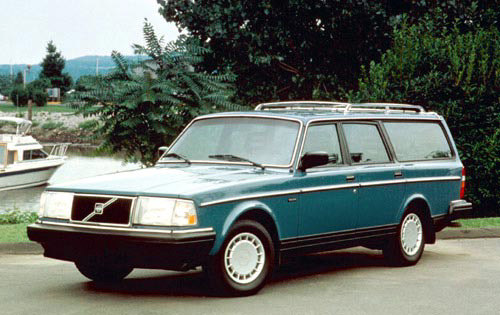
When I lived in London and I had a car -my much beloved 1988 Volvo station wagon being the last of the crop, I would move about the city using public transport too. 


However, come the weekend, out came the car. 

Drive here, there. 

To the West End or South London, to Windsor's Great Park or the art galleries in Hampstead or Whitechapel.

But in Madrid, I don't own a car. 

I really don't need it, so public transport has become, after walking on foot, my preferred mode of moving about town.

Also, there's the element of fatigue. You, the reader, may be able to relate to this. Why is it that as children we had humongous reserves of energy but, as adults, we can hardly make it through the day?

It is a recurring theme that, when I get out of work, I make it home, and do my best not to fall asleep on the sofa. I have zero energy. 

So, when faced with the task of taking my watch and finding a jeweler who can change the battery, I just can't spare the few 'joules' I may have in my body doing anything other than dinner, and, maybe, doing some reading. 

I also want to add changing the channel to that list. 

Alternative Trinkets

So I live with no watch. 

Oh, but you own only one watch? No, I own five watches. All five have no battery, but it is the Omega -the one my mother bought as a birthday gift years ago- that I use on a daily basis. 

My wrist is now so used to not having a watch, that the pale, white, mark I had on it, has disappeared and now my entire arm is one color.

So, what have I done in the mean time? 

Well, when I was younger and this happened, I would ask people for the time. 

But now that I'm an adult, I ask no one for the time. 

Instead, I use my old mobile/ cell phone when I need to know what time it is. 

I don't have an iPhone or a smart Android phone (other than work's BlackBerry) but I think that my regular, old-fashioned, mobile Samsung mobile phone (which slides open and I love that), is apparently more important a machine than my watch.

Eventually, I'm not sure when, I'll replace the battery and that will have been that.

But after I do I'll continue to carry a mobile/cell phone on me.
 
I'm not sure about when it is that I'll stop, if ever, carrying a phone on me. It has become one of those indispensable machines without which we could not really function very well.

No, I don't think that my life would end if I didn't have a phone -and I have thought about not having a land line at all- but, curiously enough, I am aware of how big a part of our daily lives it has become. 

Just like the iPad.

I wake up and, before I go to work, I turn the radio on and start to quickly peruse the morning news

I think our lives these days are 'connected' to something, for better or for worse.

And where will it all lead?

Two days ago I was having dinner with some friends (walking distance from home). 

One of them, an American cartoonist living in Spain, mentioned very casually that people will "eventually grow tired of the internet and will move on to the next thing". 

Yes, it was one of those "excuse me... what?" moments

Will the internet change... or disappear?  

Well, yes, it changes all the time. 

The internet in 2013 and in 1993 are two very different beings. 

And, like television, it seems to be here to stay. 

Will people grow tired of it?  If so, what will come next? 

Yes, I'm sure that someone, somewhere, will be thinking of it, but I'm not sure about how successful they will be with their idea in my lifetime. 

After all, Da Vinci thought about submarines in the XVI century (1515 I think), but we didn't really see those until 400 years later...