Thursday, May 30, 2013

 Odd Economics

AOG, Madrid
I was last in London over Christmas and I hadn’t gone back until now, late May. 

My how the place has changed!

First of all, there’s the Shard. 

A tall pyramidal structure made of glass and which some are referring to as Mordor.

Although impressive from a distance, close-up it suffers from that thing that so often occurs in the UK: location, location, location. Or rather, a lack thereof.

It is not in a good neighborhood and, for a building intent on promoting finance, it is not in the City.

I got pretty close to it from London Bridge’s station’s platform 6, which takes you straight to Charing Cross.

From there, you get a glimpse of the glass behemoth, and you can't help but be taken aback by the fact that the thing looks a) unfinished, and b) empty.

As is the case with many European cities today, there is an overabundance of empty office space, and London is not the exception.

According to FT,  “In a survey of the industry by CBRE, the world’s largest property fund by assets, three-quarters of banks with a presence in London said that they were planning to cut the amount of office space they used.”

And according to The Telegraph, in 2009: "Approximately 11.9% of City offices are vacant – equivalent to 10 large city towers – up by a tenth already in 2009 and more than double the 5.2pc prior to the onset of the credit crisis in 2007, as increasing numbers of businesses collapse or downsize.”

So it would appear that another glass tower is not really what London needs. 

And yet, there is something amazing about tall buildings. 

The way they defy our human perspective and make us dream of the views we would see from them. Yes, there certainly is a dreamy aspect to tall buildings.

Second of all, my trip to London also informed me of the fact that the city is living trough a construction boom. 

Around the Greenwich area, any empty lot has been turned over to a building company which will gladly erect one of those boring looking, yet ever so trendy, housing plots with pseudo-modern architecture (which, in case you are wondering, just means pricey properties with small rooms and hardly any storage space).

A friend of ours who lives in the area said he was appalled at all the construction and mentioned how these days, most of those properties are being snapped up by wealthy foreign nationals, who will be in the UK for, maybe, a week per year, and city types who commute into and out of Canary Wharf, but never set foot in the area.

And according to Londonist magazine, this boom is only helping to make property even more expensive: “Average asking prices in London have gone past the £500,000 mark for the first time, and Camden has joined Westminster and Kensington and Chelsea as a borough where average prices are over £1m. 

We’ve also noticed a little flurry of articles pointing out the extent of foreign interest in high-end property. 

The New Statesman points out today that only 45% of buyers in central London are UK nationals; Russians and Middle Eastern citizens are those who seem to find the posh bits of the capital most tempting. 

The New York Times recently looked at the effect on local businesses of increasing numbers of owners using their London homes as temporary stop-off points. 

This phenomenon is exemplified in One Hyde Park, where Vanity Fair found that just 17 of the 76 apartments sold are registered as primary residences, and seems to be practically empty.”

I wonder about how healthy this is for a country.

On the other hand…

During my stay, I also met with a couple of friends. They corroborated this idea about London’s average housing prices being too steep, especially for a country where average wages are around £26,000. 

Who in London can afford half a million for a place to live?

Some can, no doubt, but most people, most Londoners, cannot. 

On that subject, we talked about recent studies which mentioned how, it is now becoming very obvious, that all the wealth being created in the City of London is not filtering downwards. 

Yes, the City of London creates jobs, that is, it creates employment for the people who serve the people who work -mostly in finance- in the City.

However, all that wealth being amassed there is not percolating down to the rest of the country.

In fact, a large proportion of it is not even taxable, thanks to the UK’s myriad of legal and financial loopholes and tax havens (Gibraltar, Channel Islands, etc etc etc).

London might be one of the planet's financial capitals, but if you are living outside of London, in a council estate, how is that benefitting you and your family?

None of this is illegal, of course (because politicians pass the laws which benefit their friends), but is it ethical?

Desirable?

A really bad precedent...

In Spain, meanwhile, people often like to bring up the example of Mr. Álvarez Cascos, PM's Aznar's Development Minister who, a few years ago, when asked why property in Spain was so expensive, replied "if it is expensive it is because Spaniards can afford it".


What he was trying to say was that he was proud that property was expensive because it meant the Spanish were doing well.

This was before the Conservative party lost the 2004 elections and Spain was hit by an economic crisis from which the country has yet to emerge.

Unfortunately for Mr. Álvarez Cascos, as well as for Mr. Cameron in the UK, most citizens were not so rich that they could afford a property.

In Spain this meant that banks took advantage of people, prices were inflated, and the property boom turned into a bubble which burst.

It meant that property for lower middle class, and middle class families, suddenly went up in price, and many people, as is the case in the UK, were priced out of the property market.

It means that, given Spain's anachronistic mortgage and property laws, you may turn your property's keys to the bank, and it may sell it, but you will still own the bank whatever was left on your mortgage.

It means that many people are being made homeless even today in Spain, while the Government looks on.

It means that many immigrants left the country, the home they bought, and their debt, in Spain and went back to where they came from.

All of this points to Spain's failure, especially since Madrid, unlike London, is not so international a city that many Russian or Middle Eastern investors are willing to pay half a million Pounds (or the equivalent in Euros) on average for the privilege of having a property there (although they will pay this much for property on the Costa del Sol, but that's a different story).

In the UK, where this has happened in the past, what is happening is that people are slowly being forced to move elsewhere. In many instances outside of London.

It is not a crazy idea to suggest that in the not-too-distant-future, London will be a half empty city where a lot of rich people don't live, and a lot of crime takes place.

Is this really what the British Government would like?

And before anyone says 'but what can they do', let me just say, if you are the Government and you don't know what to do, then you shouldn't be the Government.


Thursday, May 02, 2013

I would ask people for the time

AOG, Madrid

A few months ago, maybe as far back as last September, my watch's battery ran out. 

I did nothing for a couple of days thinking, or rather, hoping in the most procrastinating manner, that I would get around to changing the battery in a couple of days.


A couple of days turned into a couple of months, and a couple of months turned into roughly 9 months. 

I have now been without a wristwatch for almost a year and, yes, there have been many times when I have missed it. 

Last November I took it to a local watch shop only to be told that, because of the type of watch it was, they could not do it. 

A couple of months ago, a lady from work told me that a relative of her husband's could change the battery. 

A couple of days later she said she was really sorry, but, "Being an Omega, he doesn't have the proper equipment to open it up". 

When I lived in London, changing the watch's battery had never been a problem. I had a local jeweler who changed it in a couple of days, and it was not very expensive. 

Getting Around

Of course, these people also exist in Madrid, but they are not within walking distance, and my life these days is all about walking distance. 

Having been spoiled as a child and a teenager growing up in America, where I drove everywhere and had a passion for cars, these days I live without the benefit of personal transport and rely on public transportation to get anywhere. Buses and subways are my method of braving long distances.

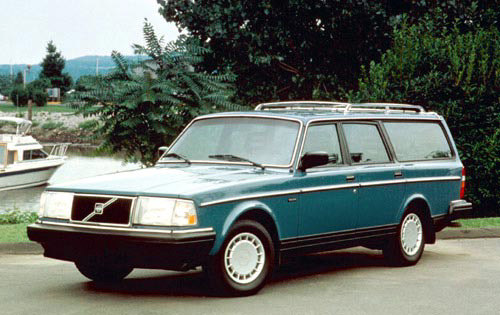
When I lived in London and I had a car -my much beloved 1988 Volvo station wagon being the last of the crop, I would move about the city using public transport too. 


However, come the weekend, out came the car. 

Drive here, there. 

To the West End or South London, to Windsor's Great Park or the art galleries in Hampstead or Whitechapel.

But in Madrid, I don't own a car. 

I really don't need it, so public transport has become, after walking on foot, my preferred mode of moving about town.

Also, there's the element of fatigue. You, the reader, may be able to relate to this. Why is it that as children we had humongous reserves of energy but, as adults, we can hardly make it through the day?

It is a recurring theme that, when I get out of work, I make it home, and do my best not to fall asleep on the sofa. I have zero energy. 

So, when faced with the task of taking my watch and finding a jeweler who can change the battery, I just can't spare the few 'joules' I may have in my body doing anything other than dinner, and, maybe, doing some reading. 

I also want to add changing the channel to that list. 

Alternative Trinkets

So I live with no watch. 

Oh, but you own only one watch? No, I own five watches. All five have no battery, but it is the Omega -the one my mother bought as a birthday gift years ago- that I use on a daily basis. 

My wrist is now so used to not having a watch, that the pale, white, mark I had on it, has disappeared and now my entire arm is one color.

So, what have I done in the mean time? 

Well, when I was younger and this happened, I would ask people for the time. 

But now that I'm an adult, I ask no one for the time. 

Instead, I use my old mobile/ cell phone when I need to know what time it is. 

I don't have an iPhone or a smart Android phone (other than work's BlackBerry) but I think that my regular, old-fashioned, mobile Samsung mobile phone (which slides open and I love that), is apparently more important a machine than my watch.

Eventually, I'm not sure when, I'll replace the battery and that will have been that.

But after I do I'll continue to carry a mobile/cell phone on me.
 
I'm not sure about when it is that I'll stop, if ever, carrying a phone on me. It has become one of those indispensable machines without which we could not really function very well.

No, I don't think that my life would end if I didn't have a phone -and I have thought about not having a land line at all- but, curiously enough, I am aware of how big a part of our daily lives it has become. 

Just like the iPad.

I wake up and, before I go to work, I turn the radio on and start to quickly peruse the morning news. 

I think our lives these days are 'connected' to something, for better or for worse.

And where will it all lead?

Two days ago I was having dinner with some friends (walking distance from home). 

One of them, an American cartoonist living in Spain, mentioned very casually that people will "eventually grow tired of the internet and will move on to the next thing". 

Yes, it was one of those "excuse me... what?" moments. 

Will the internet change... or disappear?  

Well, yes, it changes all the time. 

The internet in 2013 and in 1993 are two very different beings. 

And, like television, it seems to be here to stay. 

Will people grow tired of it?  If so, what will come next? 

Yes, I'm sure that someone, somewhere, will be thinking of it, but I'm not sure about how successful they will be with their idea in my lifetime. 

After all, Da Vinci thought about submarines in the XVI century (1515 I think), but we didn't really see those until 400 years later...  

Monday, April 22, 2013

Pen and paper...

AOG, Madrid

I don’t normally do new year’s resolutions. I don’t like to do them because I always find them nigh near impossible to stick to. 

However, this year, for some strange reason, I did a small resolution list. 

Among the items listed were:

1-    lose weight
2-    write a short story per month
3-    be more sociable

Number 1 is on and off. It always has been with me. But that’s a post for a different day. 

Number 3 I remind myself of every time someone calls and I’m at home, and all I want to do is stay there and not deal with humanity. 

However, I confess that this year I have actively sough out, and worked on, my social life.

Number two, I admit, has been a long time coming. 

Thus far I’m already running behind about three months, and I’ve just written one short story. 

I have, however, started on another one, and there’s a third one on the back of my mind. 

And I can say that this is the case only because a few months ago something happened which has helped me to get my creative act together and do some serious, or almost serious, writing.

Mid November last year I was lucky enough to join a writers group in Madrid. 

I had joined a critique group years ago, but my attendance always waned since it always seemed like we got together to talk and not write, which for some reason is what I, and I alone, thought would happen.

But then one day I came across this group, and thought I would give it a try. 

Most of the people who attend are British, but there’s the odd American, the odd Canadian and odd Spanish member here and there, but there’s other 'odd' nationalities too!

The group itself was founded by an Irish guy who’s been living in Spain for a few years. 

It has been going strong for over a year and I have to say that I was made to feel welcome from day one.
 
Since I joined, the group has gone through a few changes. In fact, the very day I joined I, along with everyone else, was presented with the group’s new rules. Among the one’s that stood out the most to me were: no eating during meetings and no laptops. And don’t be late.
 
Nothing too difficult or demanding.

Another thing it went through was a change of venue. We used to meet at this café near Bilbao metro station in central Madrid. It was ok, but a bit crowded.
 
Also, within no time some people, including me, got the idea that the café's owner was more interested in his other customers than us. For example, the music began to get louder each time. 

This, for a writing group that reads its work out loud, is problematic.

So we went on a pilgrimage to find a new place.

First to a café nearby with nice decor, but a bit crowded. Also, the guy behind the bar rather we got up and asked for things instead of him actually behaving like the waiter that he was and taking our orders at our table.
 
Also, he was not keen at all on charging people individually for their consumption and insisted on one big, fat, large bill. So big, fat, no.

The other place was near the Plaza de España area. In the back of it in fact; an area filled with restaurants serving foreign food.


Less crowded than the other two, it was, in fact, a basement all for us. However, although some people liked it, for others it was uncomfortable and the seating arrangements were a bit odd. 

But the guy who ran it was actually very nice.

Lastly, we went to a Café in Chueca neighborhood. The upstairs of the place was very spacious. We decided to meet there in the end. But no, it too is far from perfect.   

The service is very so-so, and it is starting to get noisy. But this is just like any other café in Madrid. Good weather means people will come out and socialize.

Some of us have begun toying with the idea of meeting at Retiro Park, right by the lake. There's loads of public cafés there. 

 
But I digress.   
 
I normally arrive at the group on time, find a seat, and get ready for an hour of themed writing exercises. 

When we do these, we normally divide into smaller groups of 3-5 people. On a good day maybe 20-25 people will show up!

The group’s members take it in turns to give a sort of workshop on a particular theme. We’ve had workshops on erotica, death, character creation, locations, etc.
 
Every time I go I leave thinking myself lucky for having attended –but I have yet to conduct a meeting myself. Work keeps me from being able to commit for the time being.

Nevertheless, I feel fortunate to have access to such a talented group of individuals from all different backgrounds, all interested in writing.
 
Some of them keep blogs; some are working on a novel; some like to write short stories; some write poetry. In short, one way or another, we are all interested in writing. 

After every exercise we read out loud what we’ve written to our group, and I have really begun to enjoy some people’s writing. 

Slowly, I have also begun to make some friends in the group, and I love that this is the case. I’m always short of friends.

But not just that, I have also been able to get my act together enough that, when I am in Madrid, I actually leave the house on Saturday and go to write for a while to my favorite coffee shop: Diurno. (See past post about writing in Diurno here).

What I do is post a small notice on the group’s facebook page, stating time and place. Slowly, some members have come along. 

We talk and chat and gossip, but we also go quiet and write. And I really like that we do all this.

The group’s facebook page is also very active, with members posting writing tips, ideas, in short, anything which might be of interest to other people. 

But not just that. There’s even talk of a group blog. And there’s been meetings related to it.

But not just that. A few weeks ago, we were told of the possibility of working on a screenplay for a short film.

Some people were interested, some were not. 
 
I was.

I submitted my entry (basically a 300 word story based on some images previously chosen by the director) and waited. And waited and waited some more.

Finally I was told that I, and a couple more members, had been chosen to participate in this collaborative script-writing project. 

I was over the moon when I found out!

I have never written a screenplay, or any other type of play, in my life. 

Nonetheless, I do think it is a wonderful prospect, certainly it is a learning opportunity.
 
Last Saturday we all met for lunch and what was going to be a writing session where the entire script was going to be hammered out between 4 people. 

No such luck. 

We met the director, who is French, and ate some and drank some.
 
Humus
 
Then we had a few discussions about the film and the director showed us some more images he liked.
 
Then we talked about them a bit, and then we spent about 20-25 minutes writing on our own.

We reconvened and read our bits out loud. We had some great ideas, some ok ideas, and some ideas which were very ambitious, but nonetheless welcome.

It was almost 7 pm by now, and we realized we needed to talk less, and write more. And that is how we said good-bye.
 
By our next meeting, three days later, we should have come up with something else. Something new.

So I spent most of Sunday trying to think of a story following the briefest of briefs: 

  • One should be able to watch the film with the sound off and follow it.
  • There should be a scene of feet going to and fro.
  • Only 4 characters.
  • Use older people because the give a movie ‘texture’.
  • It should have a happy ending. 

This last bit we also discussed during the afternoon. Two of us are for it, and there’s one undecided, and one who questioned why this should be.

 I really didn’t have much of an answer beyond the feeling I got off of the images the director showed us, which were mostly depressing and keep giving off an air of alienation.

Its early days yet, but I’m sure I’m going to enjoy this new project.
 

Monday, March 25, 2013

On becoming a nuisance...

AOG, Madrid

My seventy something father called me the other day. His wife had passed away just hours before.

It had all been very sudden. He was still in shock. When I last spoke with him about 12 days ago, he was still in shock.

Before I continue, let me just say that I have not seen my father since 1988.
A few years ago, when I was still in London, he started to call.
He was then, and always, hungry for news.

However, our conversations seem to be a very repetitive affair. 


  • How are you?
  • How’s work?
  • Your partner?
  • Your mother?
  • Your sister?

My sister is always a tricky conversation. She is hardly at home and, when he calls, she is never to be found. So he complains to me about her.

He lives in Florida, and my sister is still in the UK.

Time differences aside, she does lead a very busy life.

Dog walks, training, and the usual hustle and bustle of living in the social milieu that is British country life.

So when he calls, she is hardly ever there to pick up the phone. Of course, when I call, she is hardly ever there either, so it is nothing personal.

Which is what I always tell him. Again and again.

Still, he complains.

When his wife was still alive, that is to say, the last time I spoke with her, she always enquired about my sister, my mother, and me.

As with my father, the conversation was always a repeat performance of the previous phone call.

I never met my father’s wife, but she seemed very sweet on the phone. I was glad that he had her in his life and, to be honest, I never considered the idea that he would outlive her, quite the contrary.

So when he called with his news, I too was shocked. The woman my father left my mother for had departed.

I had always known about her but, thankfully, my mother was not one of those women who blamed the other woman for her husband leaving, she was intelligent enough to realise it was my father who was to blame for that. But she never really blamed him for that.

So the years passed, and when my father called the first time, he was keen, for whatever reason, to ensure his wife and my sister and I spoke to each other. It was always a strange, and mostly unilateral, conversation.

“I love you both so very much”, she often said.

To which I could only politely say “that is very sweet of you”, or something like that, but little else.


And whenever she said those words, I cringed slightly.

It always felt so odd. I did think she was a very sweet woman, and a saint for taking care of my father. But I felt strange.
Almost as strange as when my father says he loves my sister and I. To this day I have not said it back.

And the reason why is because I don’t love him.

When I talk about my father to other people I always use this stock sentence: “I don’t love him, and I don’t hate him. I just don’t have any feelings”.

Maybe it is a cliché, but I do think it sums up perfectly how I feel. I don’t know if other people understand what I mean.

He has not been in my life much. Not physically. He has been absent from it for a ridiculous percentage of it, so if I ever had feelings towards my father, they dissipated.

In a way I think I am quite lucky since, at least, I didn’t develop hatred towards him. I think I just developed a huge sentiment of indifference, and that is what is with me these days.

When he called me the other day to tell me about the passing of his wife, my first reaction was 'And you are telling me this because…?'.

Of course, I didn’t say that to him, but I didn’t say much of anything then. He was in pain and I did what I could to give him whatever support I could, which I think was very little.

I have called him a couple of times since, to see how he is, and he is well, but lonely. He has a large uphill journey which more than likely he will face alone.
His wife had children of her own, but , although they live near him, they have their own father to take care of (I assume, I have never spoken with them).

Certainly they have their own lives to live. He told me this already.

Still, my father values his independence, such as it is. He is almost blind now, due to about 20-30 years of unsupervised diabetes. He has also developed cataracts, but when we last spoke he said he was going to see his doctor about them.

He has said very clearly he does not want to go and live with his brother, nor does he want to become a nuisance to his family or anyone else.


Thursday, October 11, 2012


The news when in crisis

AOG, Madrid


One of the worst aspects of Spain’s current socio-economic situation is the effect it is having on the news. 

Last week I met up with a man who told me about his youth during the Franco years. 

He told me about the time he traveled to Italy, in the early 1970s, and about a small incident which told me a lot about the power of freedom of speech and information. 

It appears that at the time, Franco was having the last people he would order killed, killed. 

This man told me he was traveling with a small group of people, all from Spain, and that, when visiting the Vatican, their bus had to be diverted so as to stop them from seen a large anti-Franco banner which was hanging from a building. 

"That is when I first realised that Franco was not as loved outside of Spain as we had been told", he said.  

I was surprised to hear this, since I would have thought that people in Spain would have realised by then that the Regime was very in tune with propaganda.
 
But obviously not.  
 
A few days ago, J.L. Cebrián, CEO of Grupo Prisa, and owner of Spain’s top daily, El País, declared publicly that the paper had to lay off several members of staff.


In Spain, any large-scale lay offs have to be pre-approved and coordinated with the Spanish authorities.


Thus far, Mr. Cebrián, who it is rumoured earned over 11 million Euros in 2011, after declaring that “we can't continue to live so well”, has dismissed 150 journalists, and forced many over the age of 59 to early retirement –and sparked a public outcry for declaring that people over 50 (he himself is over 60) are “incapable” of producing the type of paper Grupo Prisa want to publish.


The remaining staff has to accept a 15% reduction in salary.


To this, the paper’s labor committee has responded by decided not to sign their work.  

Much like what goes on at The Economist, but as protest, not editorial policy.
 
In other words, anyone could be writing for the paper. 
 
In Spain, as elsewhere, signing your name to your work as a journalist is what gives it its value.


Unfortunately, Mr. Javier Moreno, Editor of El País, has threatened the  paper's foreign correspondents with unemployment, or with closing down their foreign post altogether.

The paper's newsroom will respond by taking him to court for coercion, threats, and bullying. And some articles have been published unsigned. 

For all intents and purposes there is an internal struggle going on at the paper and, unfortunately, the greater damage, aside from those people affected by unemployment, is the country at large.

You see, Spain, like anywhere else on Earth, needs reliable quality information, and media like El País ensured that it does.

Not long ago Spain’s current Prime Minister, Mariano Rajoy, when talking about Spain’s possible EU bailout, or not, declared that Spain was not Uganda.

However, information-wise, his party has done its best to ensure that free speech in the media approaches third-world levels.

RTVE
 
A few years ago, Spain’s Socialist government decided to ‘free’ the country’s public radio and television broadcasting network, RTVE, from government control, in a move seen by many as akin to turning it into  something as close to the BBC as possible.

Shortly after Spain’s Conservative party (the Partido Popular, or PP) took office last November, several changes at RTVE were implemented.

After having been questioned by some of the country’s top television journalist live on air by RTVE during the period immediately after its new charter was implemented, many at the PP felt that they needed to be taught a lesson, and they were removed.
Soon after, the Government repealed the Socialist Government’s law and, once again, turned RTVE into a Government mouthpiece by appointing one of its trusted men as Director of the public corporation: Leopoldo González-Echenique.

He in turn appointed as News Director a man in charge of doing that same job at TeleMadrid, a regional broadcaster criticised even by its own staff for manipulating the news.

As you may know, Spain is divided into 17 semi-autonomous regions, each with its own regional television and radio stations.

Of course, out of all of Spain’s news programs, those of TeleMadrid had of late (and for several years) experienced the lowest audiences, and its News Director is now in charge of the country’s largest broadcaster news programs.

Needless to say, where once TVE’s news shows had the highest ratings in the country, it now trails the private broadcasters. 

Not by much, but the trend is not about to change anytime soon.

It is not surprising that this is the case. 

Watching the news now is similar to watching a continuous party political broadcast. 

I'll give you an example.

Last September, when there were public riots in Madrid, on the day of the riots, TVE (although, to be fair it did mention the on-going riots at the start), spent 15 minutes talking about the Catalan President’s move to call for early elections (and the subsequent referendum concerning the independence of Catalonia) before it turned its attention to the situation on Madrid’s streets. 

 Fifteen minutes.

All the while the country’s other news channels, to say nothing of foreign channels like Al Jazeera, Russia Today, CNN Europe or the BBC, were broadcasting the riots live from Madrid’s streets.

But it is not just television. RTVE’s radio stations have also taken a turn for the worse. 
The Corporation’s president has also decided to swap radio presenters for people closer to his, and the PP’s, way of thinking. 

A case in point is  RTVE's Radio5, an all-news radio station. 

Popular presenter Juan Ramón Lucas was removed from his morning news talk show (En días como hoy – 'On days such as today') and replaced by Manuel Hernández Hurtado, who worked with him on the same morning show but, according to many, has different political views.

The morning news show in question has turned into, not surprisingly, a pro-Government three ring circus.
Whereas once you could expect to hear different voices arguing different sides of a particular story, these days you are expected to believe that what they serve as partisan views represents the view of  ‘most people’.

If you want to know what the official Government posture is on any issue  you need just tune your radio to them and you will hear it. 

In other words, they are biased.

Fortunately for Spain, there are still independent media struggling to give a voice to the other half of the country. 

Unfortunately, Spain’s current economic crisis, paired with unscrupulous businessmen like Mr. Cebrián, is ensuring that the country’s free voices may not remain free for much longer. 
 
Not so much because the Government will do their best to keep them quiet, which they will, but because the news, after all, are a business, and at present the economy is looking less than rosy.
 
And free speech is the biggest loser.

Tuesday, July 03, 2012

Travelling with Americans

AOG, Madrid

Last weekend, after spending a few days with my partner, I flew from Barcelona back to Madrid. 

As I waited to board the plane, I noticed a man and his young son watching a soccer match between Germany and Greece on television. Because it was soccer, at first I thought that they were German. 

However, after a while, I overheard them speak and realised they were American. Yes, I was slightly shocked that somebody from the US would like soccer.

As luck would have it, they sat next to me on the plane, and we spent the entire flight, from take off to landing, talking about Europe and the US.


It was very interesting to hear him speak. After a few minutes he realised I was for Obama and never liked Bush, and I realised that he didn’t like President Obama at all and was very pro Bush.

We spoke, however, without acrimony, and listening to what the other had to say in a very amicable way. 

I was very surprised about what he said. It was like his views were taken from an alternative reality. From a parallel-universe America. 

“But President Obama is destroying our economy!”

“Of course we did nation-building in Iraq. Look at how grateful they all are.”

“How are American oil companies benefitting from the invasion of Iraq They have not received one dollar. How can you say that when ,today in the US, a gallon of gas is over $5.00?”

“We had to invade Afghanistan because they were harbouring and protecting Osama Bin Laden. What were we supposed to do?”


I don’t pretend to have all the answers, or even half the answers, but I was surprised that a man who grew up and lived in California was so misinformed. So one-sided. 

Here and there I would point out the general European view about America and its policies, both at home and abroad to the father.

“I have been reading the European media, and they only concentrate on the bad side, they never tell you about the good stuff in America”, he said at one point.

I have to say that the conversation was very challenging. His son, who was 15, had just spent an entire year studying Spanish in Salamanca, Spain’s Oxford. And his son loved soccer, so he loved soccer too.

I say this because this man was a nice person who loved his family and had worked hard to support it. 

I say this because he told me and his son so during the flight.

“How many birthdays did I miss? How many games?”

His son nodded in silence.

This man was now in semi-retirement but he must have been in his early to mid 50s. 

As the conversation went on, I tried to tell him about the other side of the spectrum when it came to some of the things he spoke about.

And I have to say that, to his credit, he went quiet very often and didn’t fly off the handle at any one point. 

Perhaps what I was telling him he had heard already, or maybe he is capable of independent thought and, when given new data, he processed it in silence. 

Or maybe he was ultra polite and thought I was just a stupid liberal living in Europe. 

His son, by contrast, did not really join in to defend his father's views. He would nod, however, whenever the European side was expressed. 

I don't know if he fully agreed with it, but, at least, he had been exposed to a different perspective for one year of his life. Unilateral views, for this boy, were no longer an option. 

I mentioned that, in the case of 9-11 and what happened in Afghanistan, perhaps invading an entire country to eventually kill one guy was not the best thing we could have done. That entire families had been killed by Western soldiers in the pursuit of one man. That I didn’t see the justification.

"But they, the Taliban, were harboring a terrorist!"

I mentioned that, as he had mentioned, the middle class in America was shrinking, and that this was very strange since, in the 1960s, when America was not as rich as it is today, the middle class was not shrinking, in fact, it had been growing steadily since WWII. 

That back then, and for many years afterwards, the world looked to America for guidance. But that was not the case today.

“So people hate us?”

“Some do, but then our foreign policy gives them little choice.”

“So what are we meant to do?”

“Not invade countries would be a good way to start.”

“So, are you saying invading Iraq was a mistake? Look at all the good we did.”

“We did good when, after WWII, we took up the cause of nation-building in Germany and Japan. But we didn’t do that, and have not done that, in Iraq.”

He was very surprised to hear this. His facial expressions were very interesting to watch. I think that at times he had a hard time taking in this new perspective. 

And then we went on to speak about his son’s future; and his own future.

“If you want to open a restaurant, why don’t you go to college? Take some courses; you have experience, how about some economic theory and new business concepts?”

“Dad I told you to do that!”

And then he told me about his new “job”, managing his younger son who wants to act.

And about how he needs to help his wife out, and look out for his  soccer-loving 15 year old’s college career.

And that of his other son from another marriage, but which they never talked about.

And I realised what a great father this guy probably was, and how unfortunate that he was a bit of a poster child for the dangers of misinformation and a lacking education. 

At one point he asked me if the sun was a planet just like the Earth and about how European countries managed to have free health care and not break the bank.

“Socialism just does not work, look at the Euro!”

And, when I got home, I turned on my television and, during my channel surf in search of BBC World, chanced upon Fox News.